


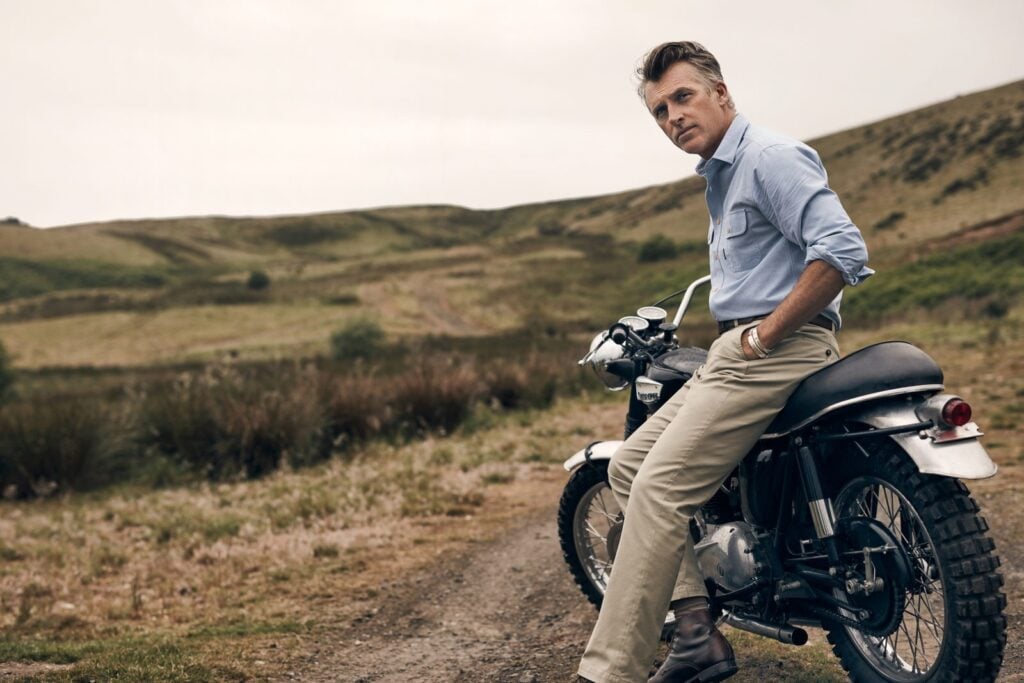
American menswear has a long habit of recycling old workwear ideas into new wardrobes, and few labels illustrate that pattern as clearly as this heritage menswear brand. Duck Head traces its identity back to canvas workwear, yet its current range leans on cotton twill, waxed canvas, and modern performance textiles. The result is a catalog that reads as both familiar and current, built around staples rather than seasonal gimmicks.
The Origins of Duck Head: From 1865 Workwear to Modern Heritage Brand
Duck Head‘s story begins with the O’Bryan brothers, who built a workwear line from a heavy canvas fabric known simply as “duck.” That fabric gave the company its name and its earliest purpose, outfitting laborers who needed clothing that could survive a full day’s work. Decades later, the brand resurfaced as a favorite among college students in the ’80s and ’90s, a period the company still references directly in its product descriptions.
That dual identity, part workwear supplier and part campus staple, is part of what makes Duck Head an interesting case among American heritage labels. Few companies can point to both a nineteenth-century founding story and a specific collegiate revival decades later. The brand describes itself as future-facing while still drawing on that history, a framing that shows up repeatedly across its current collections.
Understanding Duck Canvas: The Signature Material Behind Duck Head’s Legacy
Canvas remains central to how the company presents itself. The Duck Canvas Barn Coat, for instance, is constructed from 10.38-ounce duck canvas and finished with a soft cotton flannel lining, a direct nod to the original workwear fabric the founders used. A Waxed Canvas Log Carrier and a Waxed Canvas Dopp Kit, the latter built from 18 oz. waxed canvas with nylon lining and a brass zipper, extend that same material into accessories.
Field Canvas also appears as a named fabric line within the broader collection, alongside references to “Harbor Duck Canvas” outerwear and a “Refined Canvas” category. Together these pieces show that canvas is not a single product for Duck Head but a family of weights and finishes applied across coats, bags, and workwear-inspired garments. That range gives the fabric room to show up in both heavier outerwear and smaller travel accessories.
The Gold School Chino and the Return to Timeless Basics
The Gold School Chino is described by the brand as today’s version of the chino that college students “discovered” more than 25 years ago. It now comes in more varieties than before, spanning colorways such as khaki, rustic brown, washed navy, hunter green, antique bronze, monument gray, and bronze brown. It frames the pant as not overthought or overstated, a garment built for enduring quality rather than novelty.
That description lines up with how the company talks about its broader approach to basics. Rather than reinventing the chino each season, the brand keeps returning to the same silhouette and expanding its color and finish options instead. The chino sits alongside a wider “Pant Shop” that also includes the Briar Pant and Holston Corduroy, both described as rugged yet refined.
Performance Fabrics and Modern Versatility in the Current Collection
Alongside its canvas and twill pieces, Duck Head also lists garments built from technical or blended materials. The Dunmore Performance Pullover appears among its current offerings, and the Field Canvas line is specifically marketed as an “Elevated Performance Chino.” A Mallard Sock, meanwhile, combines merino wool, nylon, and spandex in a 67/30/3 percent blend, described as suited to wear from daily routines through evening plans.
These entries suggest the brand is not treating heritage fabrics and performance textiles as separate categories but blending them across the same shelf. A premium Japanese denim line sits near a merino Fair Isle sweater and a boiled wool jacket, all under one roof. For a heritage menswear brand, that mix signals an effort to keep old silhouettes relevant without abandoning updated materials.
Classic Staples: Sport Shirts, Denim, and Outerwear Across the Range
Sport shirts remain a recurring category, including a Cotton Twill Sport Shirt, a Cotton Flannel Sport Shirt in a patchwork pattern, and a Moleskin Work Shirt described in the five-pocket style. Denim is organized under the Duck Head Denim Co. label, which includes Classic Straight Denim and Slim Straight Denim, each offered in Vintage Wash, Medium Wash, Light Wash, and Rinse Wash. The denim line also extends to a Harrington Jacket and branded T-shirts in several colorways.
Outerwear spans from the Duck Canvas Barn Coat to a Corduroy Chore Coat made from garment-washed wide-wale cotton corduroy, and a Boiled Wool Jacket built from a boiled wool blend. There is also a Duck Head Vintage collection, made up of restored archival pieces from the ’70s, ’80s, and ’90s, sold as final sale items with original wear intact. That vintage arm sits apart from the main line but reinforces how central archival material is to the brand’s identity.
- Waxed canvas appears across outerwear and accessories, including the Duck Canvas Barn Coat and the Waxed Canvas Dopp Kit.
- Cotton twill shows up in sport shirts and in accessories like the Vintage Motif Hat and the Circle Patch Twill Hat.
- Performance textiles include the Dunmore Performance Pullover and the Field Canvas Elevated Performance Chino.
- Premium Japanese denim anchors the Duck Head Denim Co. line, offered in Classic Straight and Slim Straight fits.
- Wool and wool blends appear in the Birch Fair Isle Merino Crewneck Sweater and the Boiled Wool Jacket.
- Corduroy is used in both the Holston Corduroy pant line and the garment-washed Corduroy Chore Coat.
Where the Range Lands Today
Taken together, the current lineup shows a heritage menswear brand trying to hold two things at once, an archive worth preserving and a catalog that still needs to function for present-day wear. Canvas, twill, denim, and performance blends all sit under the same name without one category dominating the others. That balance, more than any single garment, is what defines Duck Head‘s current place in American menswear.